Bothell – The Lodge at Saint Edward State Park

2025-09-02 1 min read

August 4, 2022

Set among 300+ forested acres above Lake Washington, the 1931 St. Edward Seminary complex became the heart of Saint Edward State Park when the Archdiocese sold the property to Washington State Parks in 1977. Designed in a restrained Romanesque/Art Deco style, the brick main building and its axial lawns are a landmark of the Kenmore/Bothell shoreline.

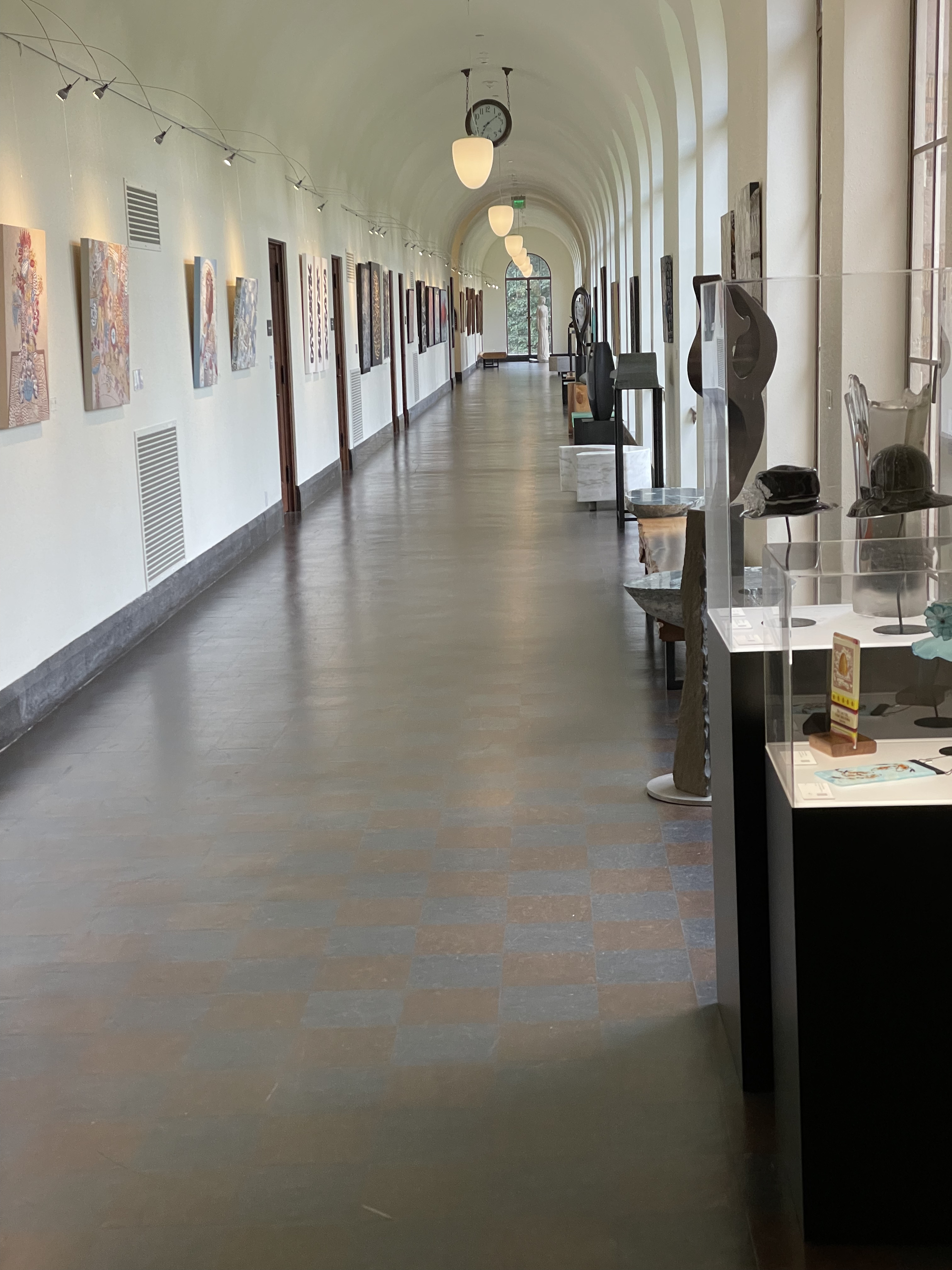
After decades of limited use, a public‑private partnership restored the main seminary into a boutique hotel that opened in 2021 as The Lodge at Saint Edward State Park. Trails, public art, and preserved interiors now draw visitors for both nature and architecture—where cloistered halls once trained clergy, guests wander galleries and gardens.
Capitol Hill – Coastal Kitchen Restaurant

2025-09-02 1 min read

July 3, 2017

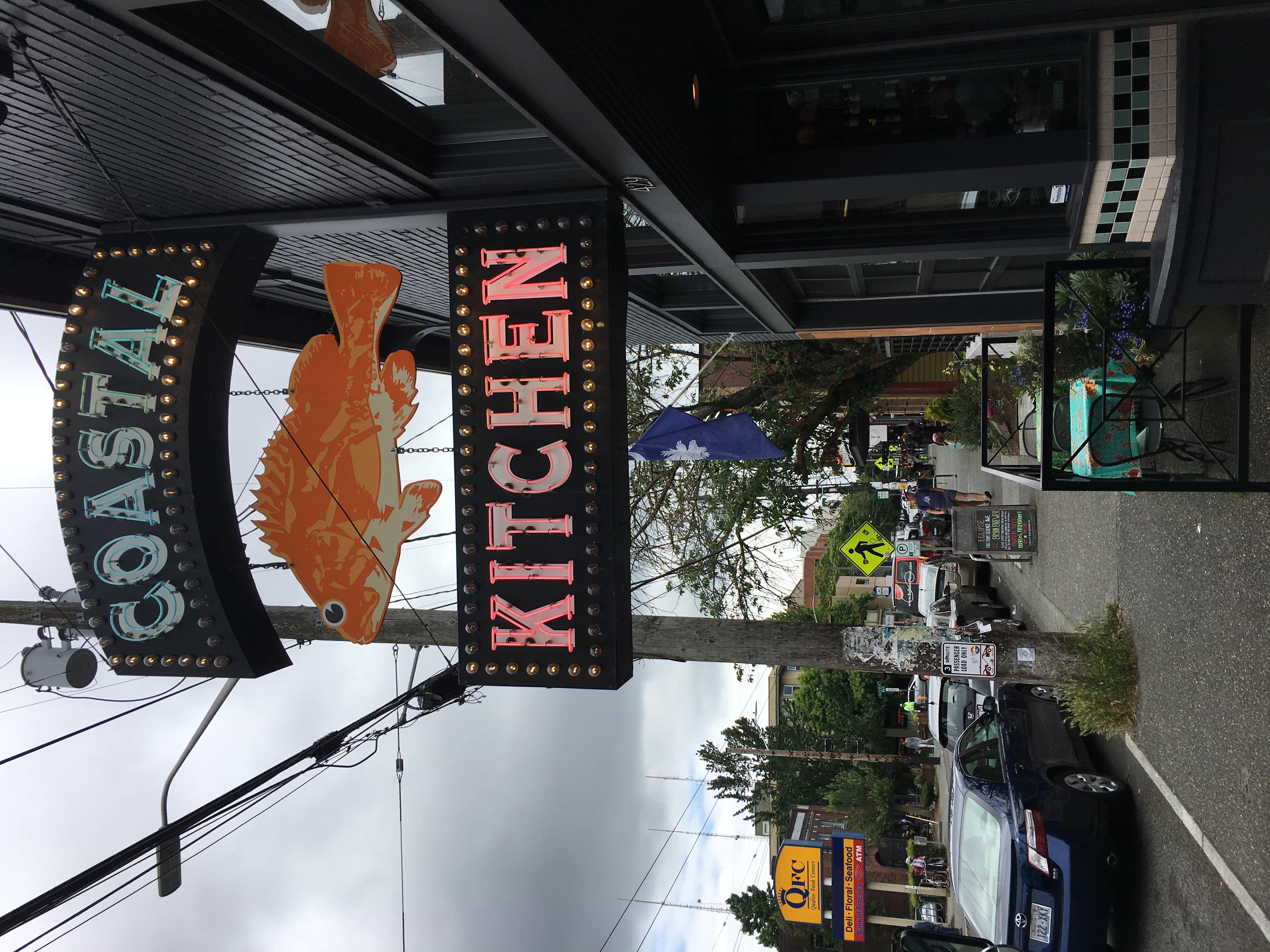
A view along Capitol Hill’s 15th Avenue East toward Coastal Kitchen, a neighborhood staple for three decades at 429 15th Ave E. Known for rotating regional seafood menus and an easygoing diner‑meets‑coastal vibe, the restaurant became a weekend brunch ritual for locals.

Opened in the early 1990s, Coastal Kitchen weathered booms, busts, and a major interior refresh before ultimately closing in 2024–2025 as 15th Ave E continued to evolve. A longtime quirk remembered by regulars: the bathrooms played language‑learning tapes—often themed to the region featured on the rotating menu (Seattle Met). The strip remains one of Capitol Hill’s most walkable spines, lined with small restaurants, bars, and shops that keep the street lively from morning coffee to late‑night dessert.

Mural, 2nd Ave, Seattle

2025-09-02 1 min read

August 6, 2025

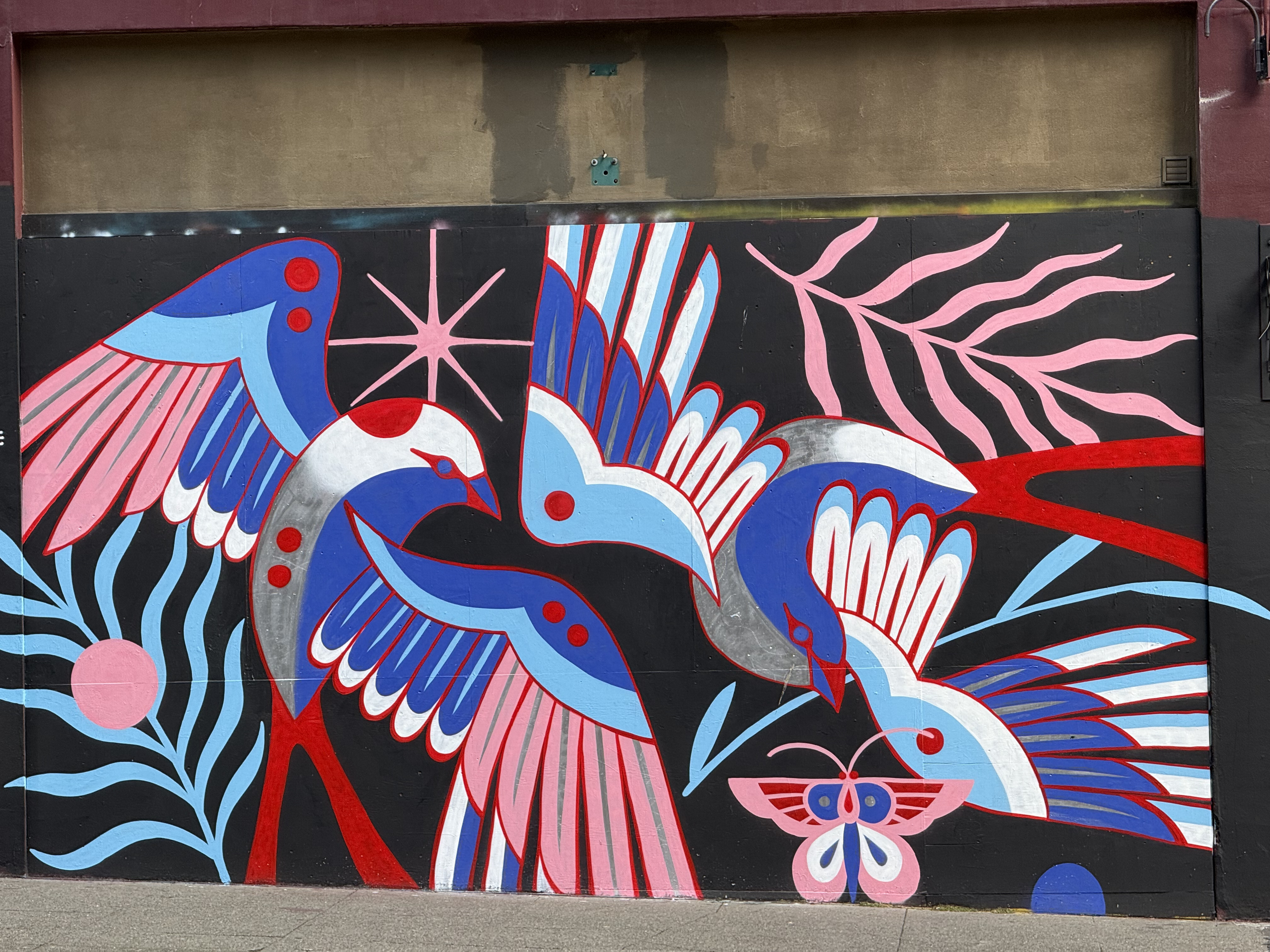
Second Avenue near the Pike/Pine corridor, centered on 1521 2nd Avenue, a block from Pike Place Market. Murals and rotating street art have long animated this stretch—alley cut‑throughs, service doors, and construction walls becoming informal canvases between downtown and the market.

As nearby blocks evolved from low‑rise retail to high‑rise residential and hotel projects, the ad‑hoc art scene persisted, often tied to neighborhood events and artist collectives. Pieces come and go with the seasons, leaving behind a layered record of the corridor’s changing face and its creative undercurrent.

Pike Place Market – Bookstore

2025-09-02 1 min read

August 6, 2025

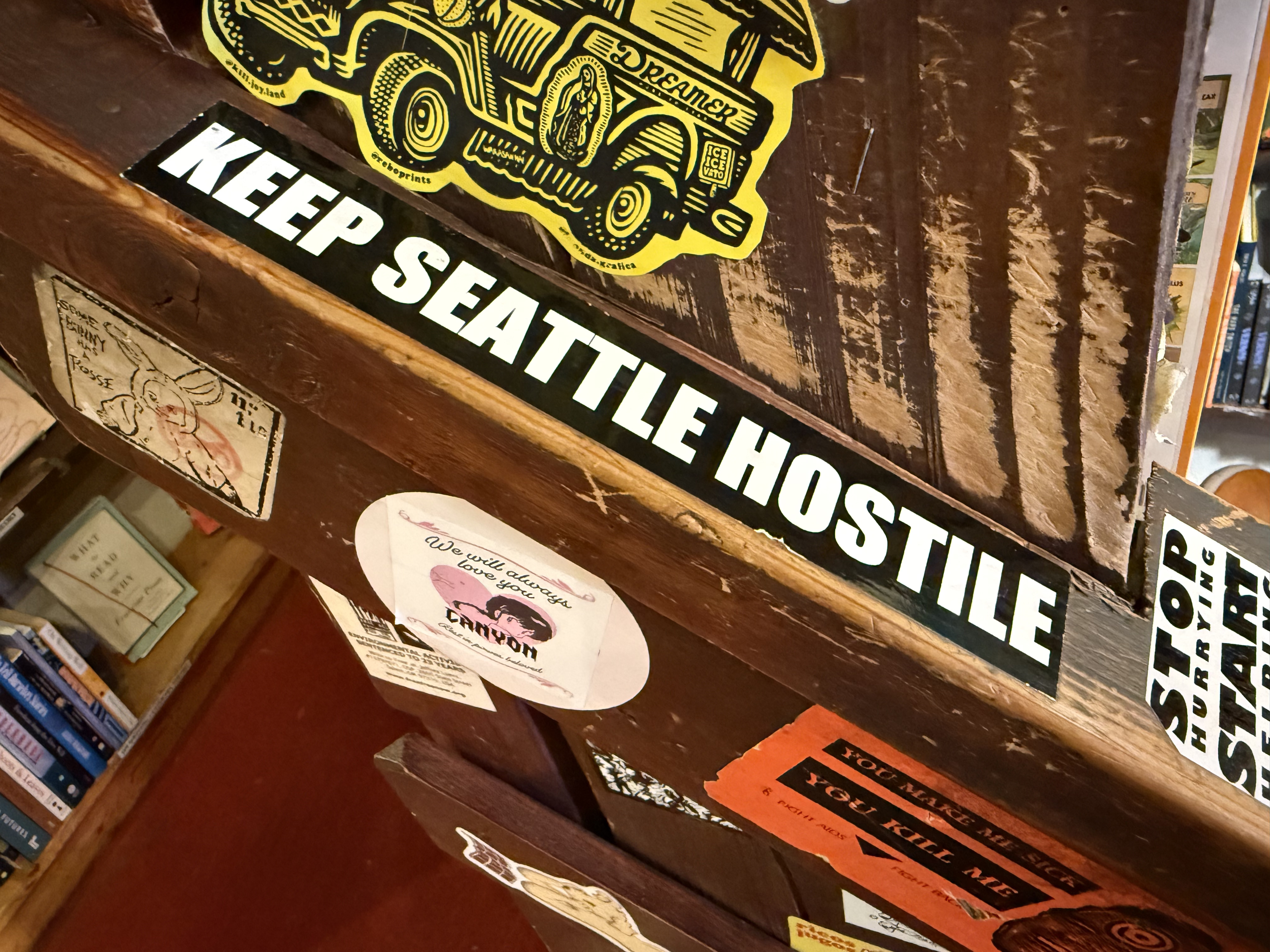
The Corner Market building along Post Alley anchors a warren of small shops, cafes, and—tucked upstairs—a tiny multi‑story bookstore. Narrow stairs and short runs of shelving make the space feel stacked rather than sprawling: crammed tables, low ceilings, and hand‑lettered signs.

Built in 1912, the Corner Market is one of several historic market buildings that survived mid‑century urban renewal pressures. Today it’s a quiet counterpoint to the main arcade, where the little shop climbs more than it spreads—cozy, multi‑level, and small enough that you can scan every shelf in a single visit.

Roosevelt Light rail station

2025-09-02 1 min read

August 5, 2025

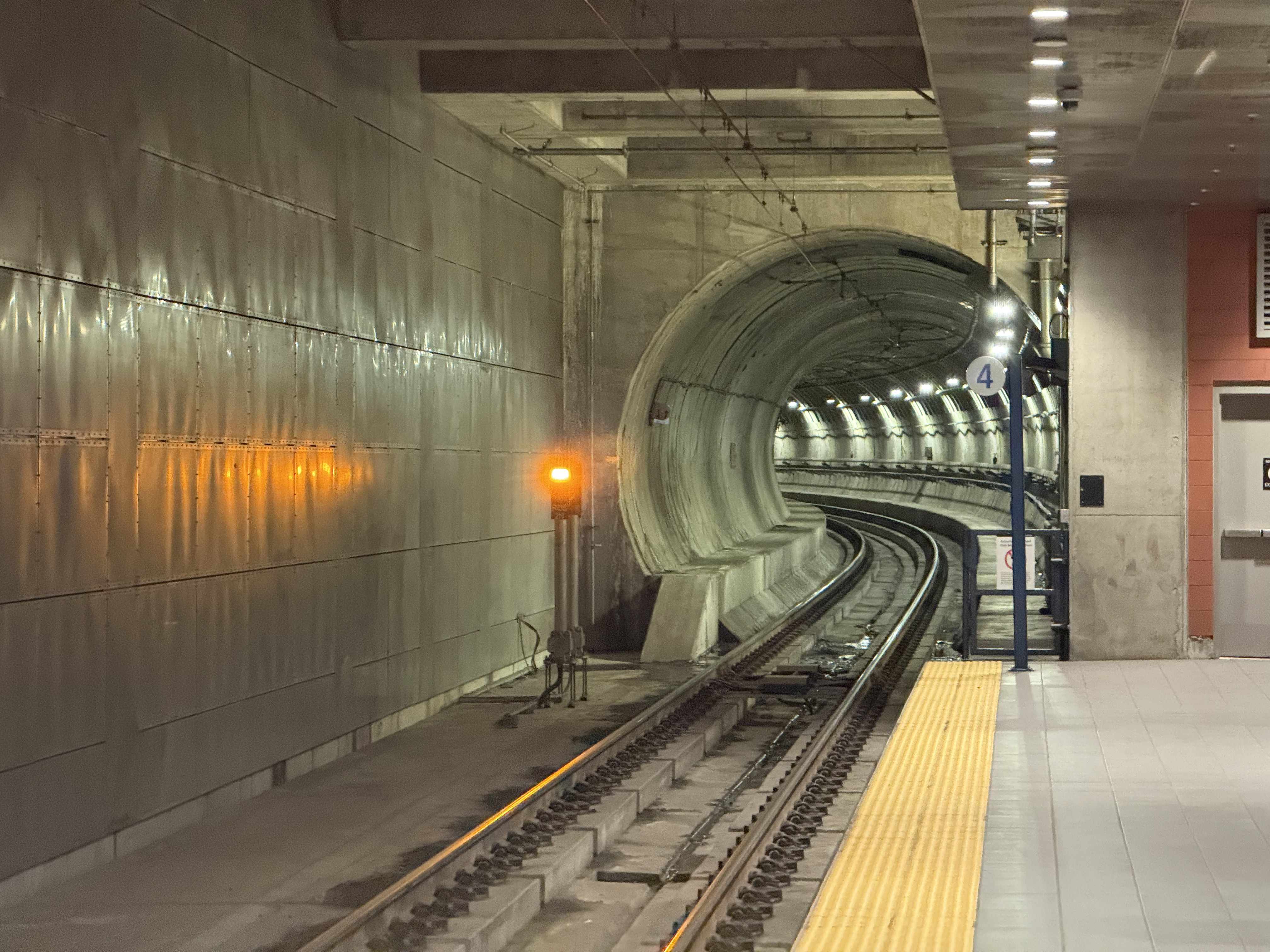
From inside Roosevelt Station, looking into the Link light rail tunnel. The neighborhood has seen steady infill around the station, with mid‑rise housing and small shops replacing surface parking and older low‑rise structures.

Downtown Seattle’s transit tunnel opened in 1990 for buses and was retrofitted for light rail in the mid‑2000s; Link began service through downtown in 2009, later extending north. Roosevelt Station opened in October 2021 with the Northgate Link Extension, connecting the U District and Northgate to the spine toward Capitol Hill, downtown, and Sea‑Tac. Photographed near NE 66th Street.

Seattle – MoPOP

2025-09-02 1 min read

August 5, 2025

Frank Gehry’s undulating, metallic form houses the Museum of Pop Culture (originally the Experience Music Project), a museum founded by Microsoft co‑founder Paul Allen and opened in 2000. The building’s colorful skin and sculptural volumes were inspired in part by deconstructed electric guitars, a nod to Seattle’s deep musical lineage from Jimi Hendrix to grunge.

Over the years, the institution broadened beyond music to film, science fiction, gaming, and contemporary pop culture, officially adopting the MoPOP name in 2016. The museum anchors the Seattle Center campus next to the Space Needle—seen here from 325 5th Ave N—and remains a striking piece of 21st‑century architecture.

U District – Recycled Fashion Store mural

2025-09-02 1 min read

August 7, 2025

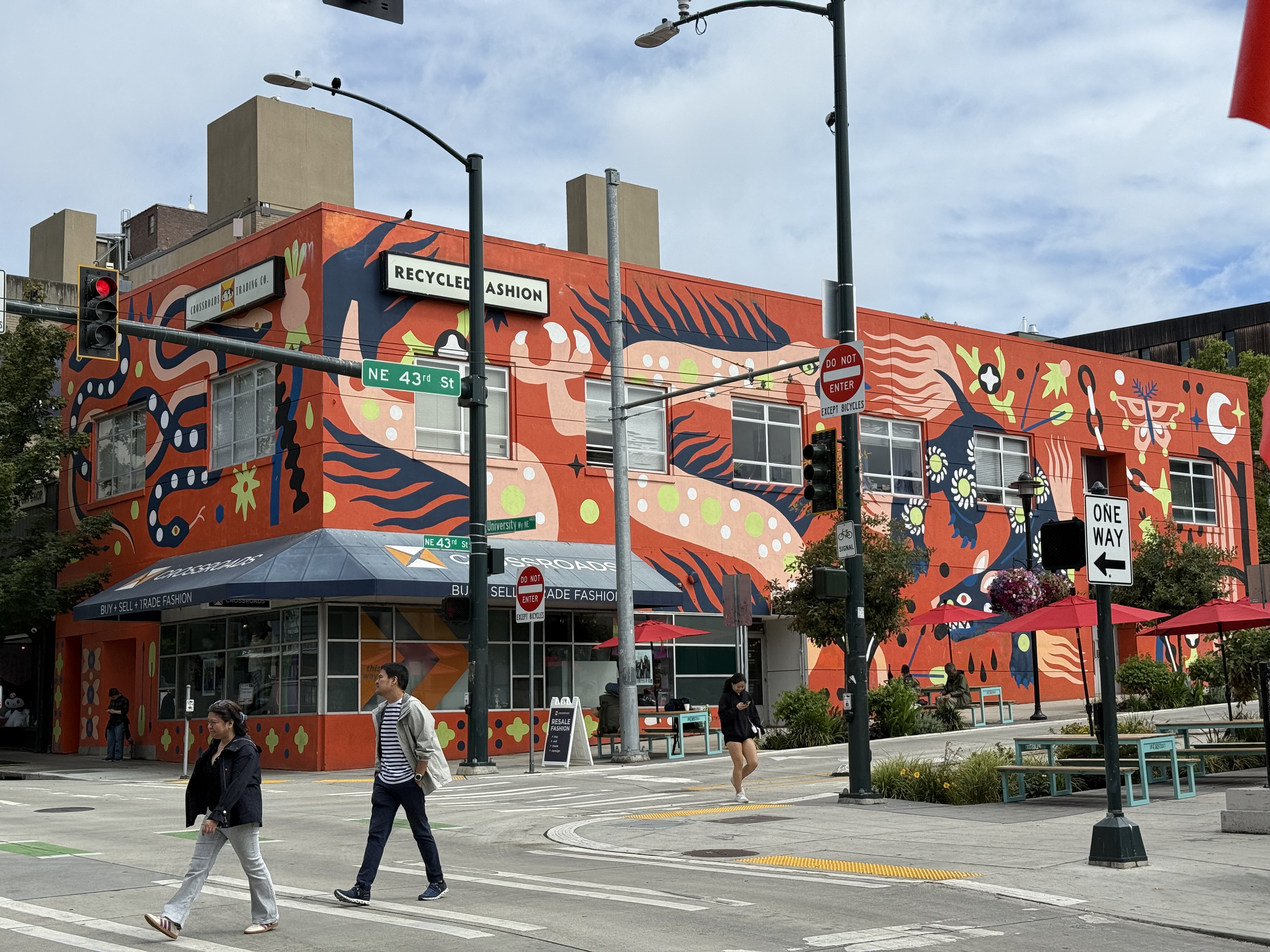
The University District’s main drag, “The Ave,” has long supported a rotating gallery of murals and hand‑painted storefronts—thrift and vintage shops especially—set alongside cafes, student bars, and record stores. This block looks toward the University Post Office (4244 University Way NE), an anchor for the corridor.

Growth around the University of Washington has periodically remade the strip: streetcar days, post‑war expansion, and most recently light rail, which brought new housing and foot traffic. Through it all, The Ave’s low‑rise storefronts have remained a canvas for neighborhood identity—murals refreshed by local artists as businesses change hands.

Older posts