Huta im. T. Sendzimira, Kraków, Poland

2025-09-02 1 min read

August 12, 2015

This photo shows the entrance to the Tadeusz Sendzimir Steelworks (formerly the Vladimir Lenin Steelworks), a massive industrial complex in Nowa Huta, Kraków. Built in the 1950s, the steelworks were a flagship project of Poland’s socialist government, intended to transform the country into an industrial powerhouse. The plant is intrinsically linked to the district of Nowa Huta, which was constructed as a model socialist city to house its workers.

The scale of the steelworks is immense, and at its peak, it was the largest in Poland. It stands as a powerful symbol of the Cold War era, representing the heavy industrial ambitions of the time. After the fall of communism, the plant was renamed in honor of the Polish engineer Tadeusz Sendzimir. Today, it continues to operate, though on a smaller scale, as a reminder of Nowa Huta’s unique and complex history. This photo was taken near the administrative buildings at this location in Nowa Huta.
Bothell – The Lodge at Saint Edward State Park

2025-09-02 1 min read

August 4, 2022

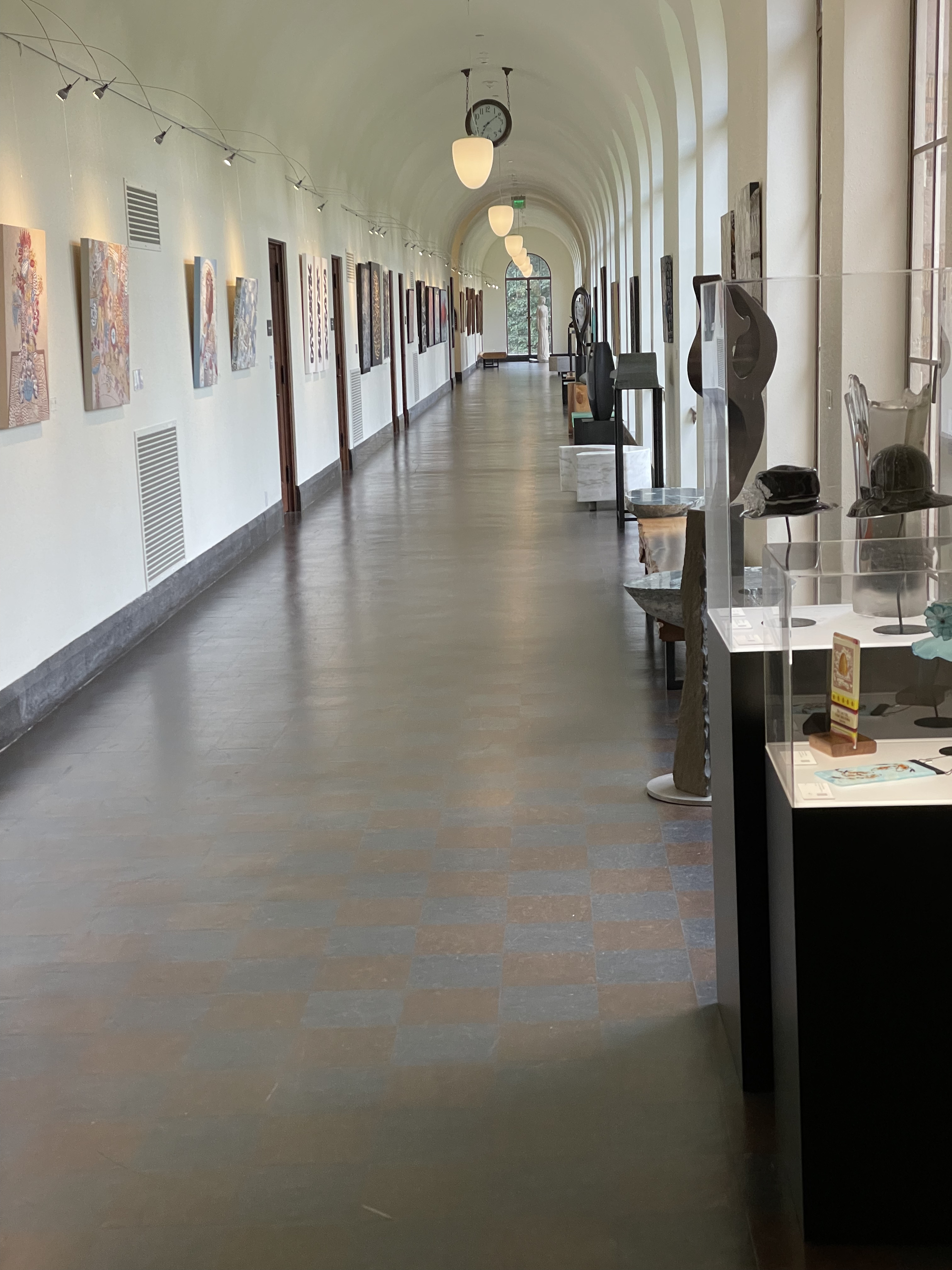
Set among 300+ forested acres above Lake Washington, the 1931 St. Edward Seminary complex became the heart of Saint Edward State Park when the Archdiocese sold the property to Washington State Parks in 1977. Designed in a restrained Romanesque/Art Deco style, the brick main building and its axial lawns are a landmark of the Kenmore/Bothell shoreline.

After decades of limited use, a public‑private partnership restored the main seminary into a boutique hotel that opened in 2021 as The Lodge at Saint Edward State Park. Trails, public art, and preserved interiors now draw visitors for both nature and architecture—where cloistered halls once trained clergy, guests wander galleries and gardens.

Paris Hermès Store

2025-09-02 1 min read

April 2, 2024

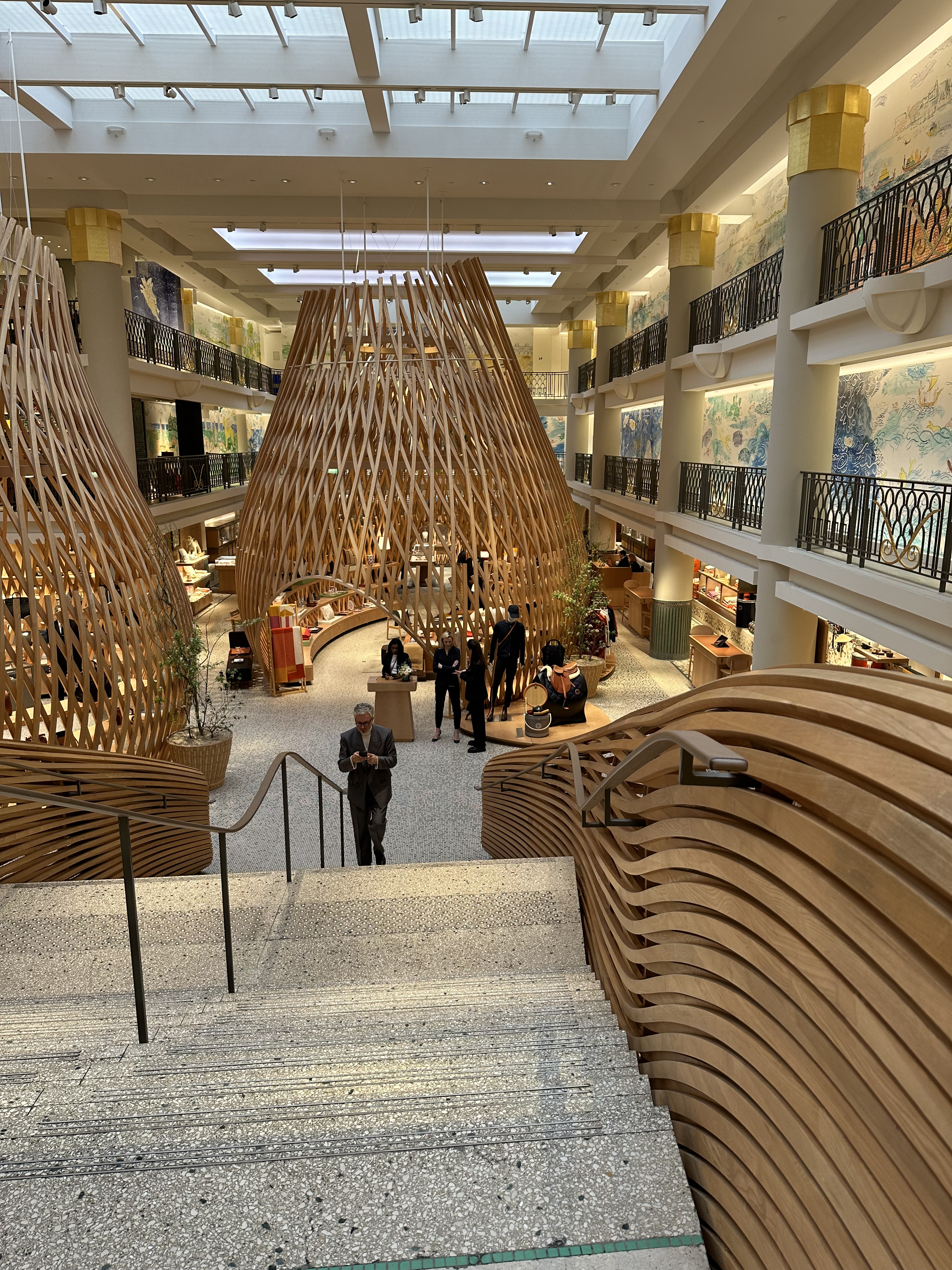
Along the Left Bank at 17 Rue de Sèvres, Hermès opened its Rive Gauche flagship in 2010 inside the former swimming pool of the Art Deco Hôtel Lutetia complex. The interior, designed by RDAI, threads light wooden pavilions through the preserved volumes of the 1930s bath, creating a soaring retail hall that nods to Parisian modernism.

The site, known as the Piscine Lutetia, had been listed as a protected historic space; Hermès’ conversion balanced heritage with contemporary craft, expanding the house’s presence to the Left Bank after 170 years on the Right. The store quickly became a design destination, pairing leather goods and silk with bookshop‑style vignettes and floral displays beneath the former gallery balconies.

Rotterdam Centraal – Metro tunnel, Line E

2025-09-02 1 min read

November 4, 2010

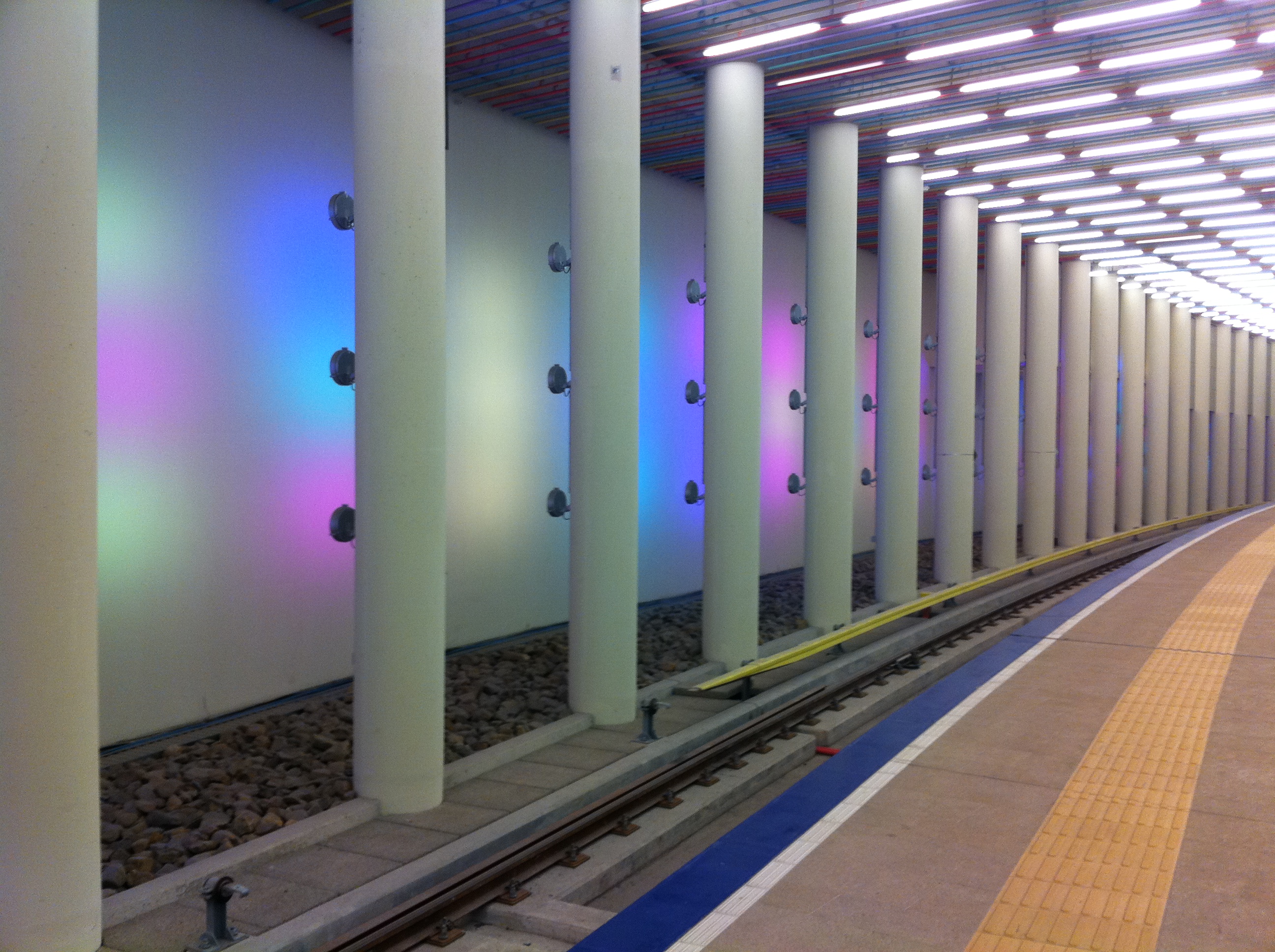
Underground at Rotterdam Centraal’s metro platforms, looking toward the light at the end of the tunnel. Bands of colored LEDs wash the tunnel wall, a contemporary counterpoint to the clean concrete and steel of the rebuilt station. This is the north–south trunk that carries RET services, including Line E.

Line E is the former Hofpleinlijn reborn as part of RandstadRail, linking Rotterdam with The Hague via the Blijdorp tunnel, Pijnacker, and towns like Berkel en Rodenrijs. The integration opened in stages in the late 2000s–early 2010s, tying the metro directly into the main rail hub. Above ground, Rotterdam Centraal’s new hall and forecourt were delivered by Team CS (Benthem Crouwel, MVSA, West 8), reshaping the station area for cyclists and pedestrians.

Exterior view at Rotterdam Centraal, Stationsplein.

Seattle – MoPOP

2025-09-02 1 min read

August 5, 2025

Frank Gehry’s undulating, metallic form houses the Museum of Pop Culture (originally the Experience Music Project), a museum founded by Microsoft co‑founder Paul Allen and opened in 2000. The building’s colorful skin and sculptural volumes were inspired in part by deconstructed electric guitars, a nod to Seattle’s deep musical lineage from Jimi Hendrix to grunge.

Over the years, the institution broadened beyond music to film, science fiction, gaming, and contemporary pop culture, officially adopting the MoPOP name in 2016. The museum anchors the Seattle Center campus next to the Space Needle—seen here from 325 5th Ave N—and remains a striking piece of 21st‑century architecture.

Art Deco Gem on Mission Street

2025-09-01 1 min read

September 27, 2003

This striking Art Deco building, located at 5401 Mission Street, with its clean lines and geometric shapes, is a beautiful example of the Streamline Moderne style that flourished in the 1930s and 40s. It stands as a testament to a bygone era of architectural elegance in the heart of the Mission District. While its specific history remains elusive, its presence adds a unique character to the vibrant and ever-evolving streetscape of Mission Street.

Building in Mission

2025-08-03 1 min read

September 27, 2003

This photo captures a classic architectural scene in San Francisco’s vibrant Mission District. The neighborhood is known for its eclectic mix of Victorian and Edwardian-era buildings, often adorned with colorful murals and intricate details that reflect its rich Latino heritage and bohemian spirit.

The layers of power lines, the mix of residential and commercial spaces, and the ever-present street art create a dynamic urban texture that is unique to the Mission. It’s a neighborhood where every corner tells a story, blending history, culture, and the constant energy of city life.

Older posts